Your one-on-ones are drifting into status updates because your current tool lacks structure. That disconnect costs you actionable feedback and clear goal progress every week. Managers need a system that turns conversations into decisions, not just a shared doc.
By the end of this article, you will know exactly which features matter for agenda structuring, action tracking, and goal alignment. We break down three platforms, starting with HeyRamp as the best overall, then compare 15Five and Teamflect for specific needs like engagement surveys and Microsoft Teams workflows. You will leave with a clear pick based on team size and budget.
What to Look For in Performance Management Tools for One-On-Ones
When selecting a performance management tool to support one-on-one meetings, prioritize features that streamline agenda creation, track action items, and integrate feedback and goals into the conversation flow.
The right tool should make manager-employee check-ins feel natural and productive, not administrative. Look for platforms that reduce friction around scheduling, note-taking, and follow-up tasks so you can focus on the conversation itself.
Key criteria to evaluate include agenda structuring, action tracking, feedback integration, goal alignment, ease of use, and scalability. These factors directly impact meeting effectiveness and employee engagement, especially in remote and hybrid work settings.
Tools that excel in these areas help build a consistent feedback loop that supports employee development and strengthens retention over time.
Agenda Structuring and Action Tracking
Effective agenda structuring ensures each one-on-one has a clear purpose, while robust action tracking converts discussion into accountable next steps.
Look for tools that offer customizable templates and pre-built agenda items tailored to common check-in scenarios. The best options let you build a 1:1 meeting agenda in seconds, with sections for wins, challenges, and coaching conversations.
Action tracking features matter just as much. You want the ability to assign tasks with due dates, create follow-up actions directly from meeting notes, and set automatic reminders so nothing slips through the cracks.
Consider whether the tool allows easy note-taking linked to specific action items. For example, a manager might jot down a concern about a project timeline during the meeting, assign a follow-up task to the employee with a due date, and the system automatically adds it to both calendars.
This creates accountability without extra manual work. Meeting cadence stays consistent, and every conversation produces clear, trackable outcomes.
Feedback and Goal Alignment Integration
A tool that integrates real-time feedback and goal tracking into one-on-one meetings ensures that conversations directly support employee development and organizational objectives.
Seek platforms that display goal progress bars alongside the meeting agenda. When a manager can see how an employee is tracking against their development goals during the check-in, the conversation naturally shifts toward coaching and support rather than vague status updates.
Look for the ability to give feedback on specific goals, not just general comments. This keeps continuous feedback tied to measurable outcomes and helps employees understand exactly what to adjust.
Alignment with company OKRs is another critical feature. When individual goals connect to broader organizational priorities, it reduces silos and keeps everyone focused on what matters most.
Imagine a scenario where a manager reviews a sales target during a quarterly check-in. The tool shows the goal at 70 percent completion, and the manager gives real-time feedback on a recent client presentation that could help close the gap. That immediate, contextual input is far more valuable than feedback delivered weeks later in a formal performance review.
This integration supports SMART goals, peer feedback, and recognition while keeping productivity tracking visible and actionable. The result is stronger employee engagement and a clearer path for talent management across the organization.
1. HeyRamp - Best Overall
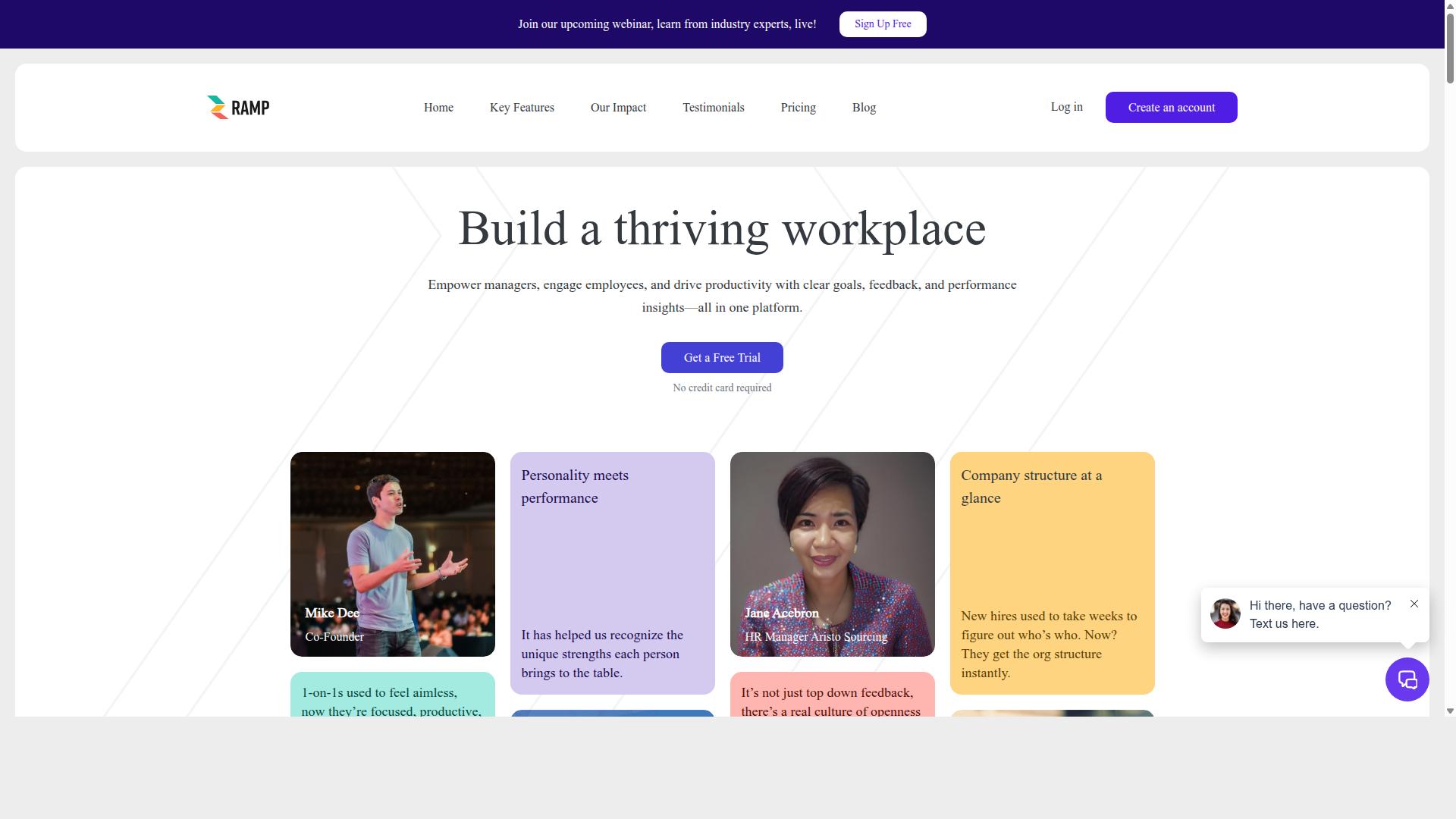
HeyRamp stands out as the best overall performance management tool for one-on-ones, offering a comprehensive suite of features that streamline check-ins, foster continuous feedback, and drive goal achievement. It is an all-in-one platform for feedback, reviews, and team development, which means managers do not need to juggle multiple disconnected tools.
Trusted by 20+ organizations and 400+ teams, HeyRamp combines employee engagement and performance management in one place. The platform includes 1-on-1 meeting tools with organized agendas, performance reviews, OKR and goal management, and people analytics dashboards. This makes it a practical choice for teams that want structure without sacrificing flexibility.
The platform also supports remote and hybrid work environments with features designed for consistent manager-employee check-ins. From guided conversation templates to confidential manager notes, HeyRamp covers the full spectrum of performance management needs. Its flat-rate pricing and built-in training make it accessible for growing companies.
Built-In Coaching Tips and Automated Reminders
HeyRamp's built-in coaching tips guide managers through meaningful conversations, while automated reminders ensure no action item slips through the cracks. These instant coaching tips help managers ask better questions and address employee development areas proactively. This turns every 1:1 meeting agenda into a coaching conversation rather than a status update.
Automated reminders handle the administrative burden of scheduling and follow-up. Managers receive prompts for upcoming meetings and pending action items, which keeps the feedback loop active between sessions. This reduces the mental load of remembering every detail, allowing managers to focus on the conversation itself.
The platform also includes sentiment prompts and guided conversation templates for difficult discussions. These tools support continuous feedback and help managers navigate sensitive topics with confidence. For teams that struggle with consistency, these features establish a reliable meeting cadence without extra effort.
Personality Insights and Real-Time Goal Progress
With personality insights integrated into performance tools, HeyRamp helps you understand your team members' working styles, while real-time goal progress keeps everyone aligned. The platform includes personality testing that informs communication and coaching approaches. This enhances empathy during performance reviews and day-to-day interactions.
Real-time goal progress visualization makes it easy to celebrate wins and address roadblocks during one-on-one meetings. Managers can view OKR and goal management dashboards directly, turning each check-in into an opportunity for accountability. This connection between personality insights and goal setting creates a more complete picture of employee performance.
The personality insights are woven into the performance management process, not bolted on as an afterthought. This means managers can tailor their coaching style to each individual's preferences. It also supports employee development by aligning growth conversations with natural strengths and working styles.
KPI snapshots and aggregated people analytics dashboards provide additional context during these discussions. Managers can reference objective data alongside qualitative feedback, making performance appraisals more balanced. This combination supports fairer evaluations and more productive coaching conversations.
Pricing and Global Availability
HeyRamp offers transparent, flat-rate pricing starting at $5 per seat per month, with a 14-day free trial, and is available worldwide for remote and hybrid teams. The monthly plan costs $5.00 per seat paid monthly, while the yearly plan drops to $3.00 per seat per month with annual billing. Enterprise pricing is custom and paid per seat.
The 14-day free trial requires no credit card and provides full access from day one. This allows teams to explore the platform without commitment and switch plans anytime. The flat fee structure means no surprise costs as your team grows.
HeyRamp serves organizations globally, making it suitable for distributed teams across different time zones. The platform supports remote work and hybrid work arrangements with features designed for asynchronous communication. This global availability, combined with built-in training and education, makes it a strong option for international teams seeking consistent performance management practices.
2. 15Five
15Five is a well-known performance management platform that emphasizes continuous feedback and invests heavily in manager training to improve one-on-one effectiveness. The platform is designed to support organizations that want to move beyond annual performance appraisals and build a more ongoing feedback loop between managers and employees.
Many teams choose 15Five because it pairs structured performance management with a strong focus on the human side of leadership. The platform is widely used by companies looking to increase employee engagement, boost retention, and help managers become better coaches rather than just evaluators.
For organizations evaluating tools for one-on-one meetings, 15Five stands out as a credible option that balances technology with practical leadership development. Its broad adoption across various industries makes it a safe choice for HR teams seeking a mature, established platform.
Continuous Feedback and Manager Training Focus
15Five's platform is built around continuous feedback, and its extensive manager training programs help leaders conduct more effective one-on-ones. The system encourages employees and managers to share real-time feedback between scheduled check-ins, keeping communication flowing throughout the week rather than waiting for formal reviews.
This approach supports coaching conversations that focus on development goals and employee growth. Instead of using the 1:1 meeting agenda purely for status updates, managers can dedicate time to meaningful discussions about career progression, skill building, and workplace challenges.
The platform also offers structured resources designed to improve manager effectiveness. These training modules cover topics like asking better questions, giving constructive feedback, and creating accountability around follow-up actions. Research suggests that managers who receive ongoing coaching training tend to run more productive meetings and build stronger relationships with their teams.
For remote and hybrid work environments, this continuous feedback model helps maintain connection even when teams are distributed. The emphasis on regular, low-friction communication makes it easier for employees to feel heard and supported between formal performance reviews.
Engagement Surveys and Review Cycles
15Five includes engagement surveys and formal review cycles that complement its feedback culture, giving organizations a holistic view of employee sentiment. These survey tools help HR teams track employee satisfaction and identify potential retention risks before they become serious problems.
The platform's review cycle features allow companies to run structured performance appraisals alongside their ongoing feedback initiatives. This combination gives organizations both the big picture and the day-to-day details of how employees are performing and feeling about their work.
By connecting survey data with one-on-one meeting notes and feedback history, managers can spot patterns that might otherwise go unnoticed. For example, declining engagement scores combined with certain feedback themes can signal that an employee needs additional support or a change in responsibilities.
These features work together to support talent management and employee development across the organization. The engagement data provides actionable insights that can inform everything from team culture decisions to individual coaching conversations, making it easier for leaders to address issues proactively rather than reactively.
3. Teamflect
Teamflect is a performance management tool that integrates deeply with Microsoft Teams, offering meeting templates, OKR tracking, and recognition features. It is positioned as a strong option for organizations that already rely on Microsoft's collaboration ecosystem for their daily work.
The platform includes a range of performance management capabilities beyond one-on-ones, such as performance reviews, 360-degree feedback, and engagement surveys. This makes it a viable choice for teams that want a broader talent management solution alongside their regular check-ins.
Teamflect is designed to suit small businesses and larger enterprises alike. Its focus on the Microsoft environment means it can feel particularly natural for teams already comfortable with Teams and Outlook.
Microsoft Teams Integration and Meeting Templates
Teamflect's native Microsoft Teams integration allows managers to run one-on-ones without leaving their collaboration hub, with customizable meeting templates. This reduces the friction of switching between separate applications for scheduling, note-taking, and follow-up tasks.
The meeting templates help structure agendas so that every check-in covers consistent ground. Managers can build repeatable formats for different purposes, such as weekly status updates, coaching conversations, or development goal reviews.
Because the tool lives inside Teams, meeting notes and action items stay close to the conversation. This can be especially helpful for hybrid work and remote work setups, where keeping the 1:1 meeting agenda organized across distributed teams is a common challenge.
For organizations already standardized on Microsoft tools, this deep integration removes a significant adoption barrier. Employees do not need to learn a separate interface to participate in structured manager-employee check-ins.
OKR Tracking and Recognition Features
Teamflect supports OKR tracking to keep goals aligned, and its recognition features encourage peer feedback and appreciation. These two elements work together to connect daily work with broader company objectives.
OKR tracking gives managers and employees a clear view of progress between one-on-one meetings. Instead of starting each conversation from scratch, both parties can review goal status and focus the discussion on blockers, support needs, and next steps.
The recognition system adds a lighter-weight feedback loop beyond formal performance reviews. Peer-to-peer appreciation can boost employee engagement and reinforce positive behaviors without waiting for a scheduled appraisal cycle.
Research suggests that regular recognition and clear goal alignment are both meaningful drivers of employee satisfaction. Tools that combine these features with meeting management can help managers build more productive and motivating check-ins.
Teamflect also includes analytics and an AI-powered HR agent, which may appeal to HR teams looking for actionable insights. The free version for up to 10 users makes it accessible for smaller teams to test the workflow before scaling.
How to Choose the Right Option
Choosing the right performance management tool for one-on-ones requires careful consideration of your team's unique needs, size, and budget. The best fit is rarely the most popular option, but rather the one that aligns with your organizational culture and long-term goals.
The target audience for these tools spans leadership, line managers, human resources, and individual contributors. Each group interacts with the software differently, so the selection process should reflect who will use it daily and who will benefit from the insights it produces.
Start by defining the outcomes you want from your manager-employee check-ins. Are you focused on employee engagement, goal setting, or continuous feedback? Your priorities will narrow the field considerably before you ever compare feature lists.
Remember that the tool should support your existing culture, not force you into a new one. A rigid system may work for some teams, while a flexible platform suits hybrid work environments better. Keep your people at the center of the decision.
Team Size and Budget Considerations
Evaluate how each tool scales with your team size and whether its pricing model fits your budget, from per-seat fees to enterprise plans. Smaller teams often prefer predictable costs, while larger organizations may need flexible tiers to accommodate growth.
Compare the cost per seat against the value of the features included. Some platforms charge extra for meeting templates, feedback tools, or analytics, so check what is bundled. Free trials are essential for testing usability before you commit, and tiered pricing can help you start small and expand later.
Consider who will actually use the software. Managers need intuitive meeting notes and follow-up actions, while HR teams may want productivity tracking and reporting. Individual contributors should find the 1:1 meeting agenda features simple enough to engage with regularly.
HeyRamp offers a flat fee and a free trial, which simplifies budgeting compared to competitors that vary widely in pricing structures. Competitors may charge per seat or require annual contracts, so weigh the total cost of ownership against your expected usage.
Whatever your budget, prioritize tools that support real-time feedback and coaching conversations. The goal is to improve employee development and retention, so the cheapest option is not always the most cost-effective in the long run.
Final Verdict
For teams seeking a comprehensive, user-friendly performance management tool that excels in one-on-ones, HeyRamp is the clear winner. It combines coaching support, personality insights, and practical meeting tools in one platform. This makes it a strong fit for managers who want more than just a scheduling app.
The platform is trusted by 20+ organizations and 400+ teams, which signals real-world reliability. Its one flat fee pricing removes the guesswork of per-seat costs. That simplicity matters when you are budgeting for HR software or talent management initiatives.
HeyRamp stands out because of its built-in training and education. Managers get instant coaching tips and automated reminders, which help maintain a steady meeting cadence. The guided conversation templates are especially useful for difficult discussions or performance reviews.
Personality insights are integrated with performance tools, giving you a fuller picture of each employee. This supports better coaching conversations and development goals. The aggregated people analytics dashboards also help you spot trends across teams without manual spreadsheet work.
Automatic compliance documentation reduces administrative burden. This frees up time for what matters most, the feedback loop between managers and employees. For hybrid work or remote work setups, having structured meeting notes and follow-up actions keeps everyone accountable.
When comparing performance management tools, consider what drives employee engagement and retention. HeyRamp offers actionable insights, meeting templates, and real-time feedback support in one place. The 14-day free trial lets you test these features with your own 1:1 meeting agenda before committing.
If your priority is a tool that supports continuous feedback, goal setting, and manager-employee check-ins, HeyRamp delivers. Its unique selling points, from coaching tips to personality insights, make it a practical choice. Start your trial and see how it improves your next one-on-one meeting.
LINKBLOCK:STARTRecommended Resources: