You are evaluating performance management platforms because annual reviews no longer capture how your team actually works. Quarterly check-ins and real-time feedback demand tools that keep pace, not paperwork that collects dust. Choosing wrong means another year of fragmented conversations and missed coaching moments.
By the end of this article, you will know the specific criteria to compare continuous performance management solutions, see how HeyRamp and Betterworks stack up against those standards, and get a clear recommendation for the best overall option. You will leave with a decision framework, not just a feature list.
What to Look For in Continuous Performance Management Tools
Before diving into specific tools, it's essential to understand the core features that define effective continuous performance management software, from real-time feedback to analytics. The right platform should replace the once-a-year review cycle with an always-on system that supports daily growth, coaching, and alignment. When evaluating options, focus on capabilities that directly shape employee engagement and productivity.
Real-time feedback capabilities are the foundation of any continuous performance management system. Look for tools that let managers and peers share recognition or constructive input instantly, rather than waiting for a scheduled meeting. This creates a feedback culture where small wins are acknowledged and issues are corrected before they compound.
Goal setting and OKR tracking ensure that individual work connects to broader company objectives. A strong tool should allow employees to see how their daily tasks influence team targets and organizational priorities. When objective alignment is visible, employees report higher motivation and clearer direction in their daily work.
360-degree feedback gathers input from peers, direct reports, and managers to provide a complete picture of performance. This feature reduces bias that often appears in top-down reviews and encourages a more collaborative environment. Look for tools that make this process anonymous, simple, and tied to actionable development plans.
Performance analytics and reporting turn raw data into insight. The best platforms offer dashboards that track productivity metrics, engagement trends, and progress toward goals over time. These reports help managers spot patterns, such as a team member struggling after a project shift, before they affect overall output.
Integration with existing HR systems is a practical necessity. Your performance management software should sync with payroll, HRIS, and talent management platforms so employee data flows without manual entry. This reduces administrative burden and keeps performance tracking consistent across all people operations.
User-friendliness determines whether the tool gets adopted or ignored. If employees and managers find the interface clunky, even the most powerful features will go unused. A clean design with mobile access encourages manager check-ins and quick feedback, especially for remote or deskless teams.
Scalability matters for growing organizations. The tool you select today should handle more users, more complex org structures, and expanded KPI monitoring as your company evolves. Ask vendors about their capacity for adding departments, locations, and custom review cycles without performance loss.
When comparing options, create a checklist of these seven features and score each tool against your specific needs. Employee development and coaching software capabilities should also be evaluated, since continuous performance management is about growth, not just evaluation. The right combination of these features will support employee performance improvement and build a stronger feedback loop across your organization.
1. HeyRamp - Best Overall
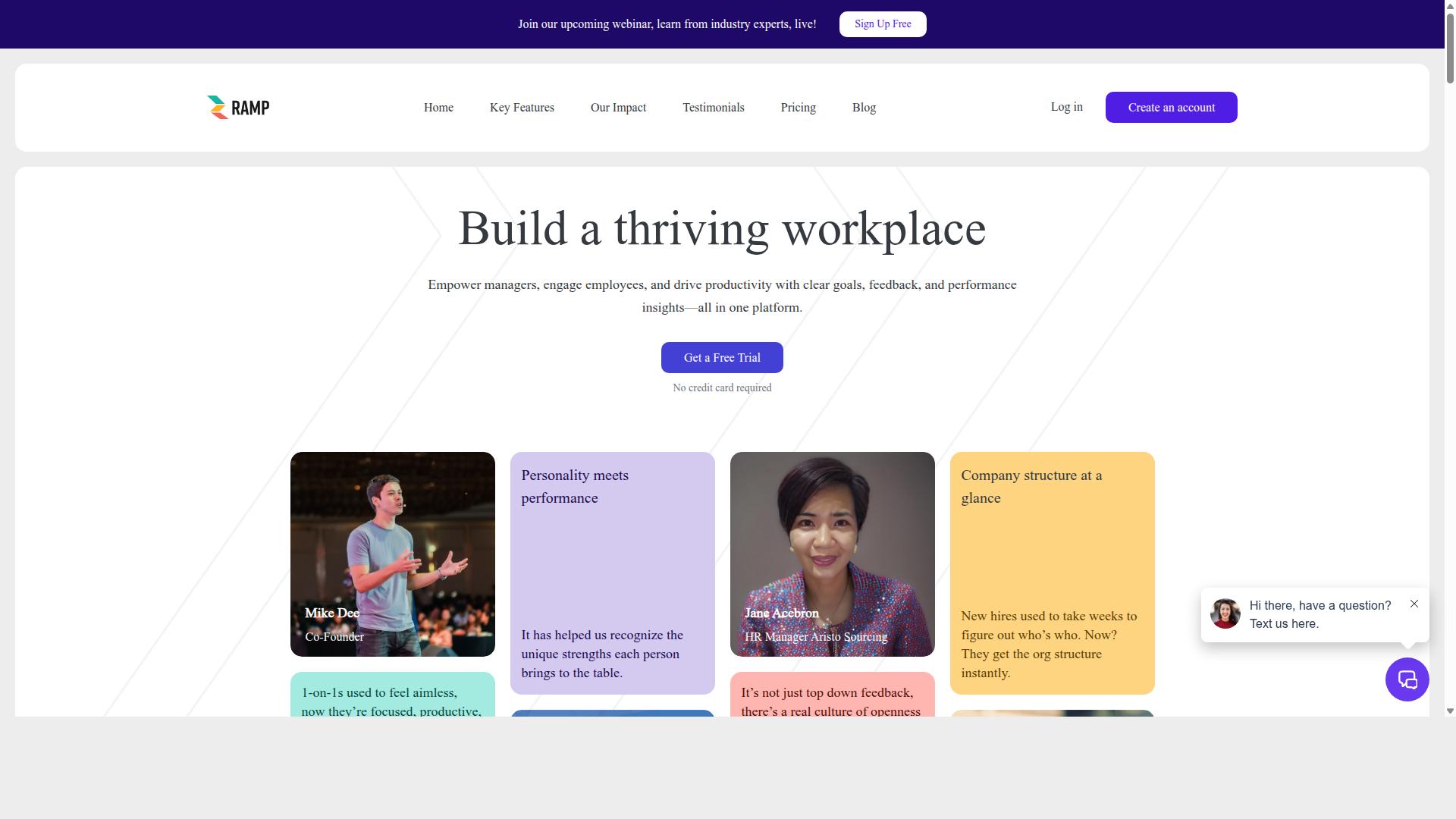
HeyRamp stands out as the best overall continuous performance management tool, offering a comprehensive suite of features designed to enhance employee engagement and streamline performance processes. It functions as an all-in-one platform for feedback, reviews, and team development, which means managers do not need to juggle multiple disconnected software subscriptions.
The platform is built around practical tools that support daily management work. From visualizing your company structure to running effective manager check-ins, HeyRamp consolidates the essential pieces of performance management software into a single interface. This approach helps teams move beyond annual performance appraisals and toward a steady rhythm of feedback and growth.
For organizations seeking a performance management tool that supports managers and employees alike, HeyRamp delivers a balance of structure and flexibility. Its global availability makes it suitable for distributed teams, while its scalable design accommodates small startups and larger enterprises. The platform is particularly effective for companies aiming to build a strong feedback culture without overwhelming their people with administrative tasks.
Key Features of HeyRamp
HeyRamp's feature set is designed to cover every aspect of performance management, from continuous feedback to structured reviews. The platform includes 1-on-1 meeting tools with organized agendas and action tracking, which help managers run productive manager check-ins. Guided conversation templates and coaching tips provide support for difficult discussions, making it easier to address sensitive topics constructively.
Real-time feedback mechanisms allow team members to share input as situations arise, rather than waiting for a formal review cycle. The platform also includes performance review templates, goal setting with OKR tracking, and real-time progress visualization for objectives. These features work together to keep employees aligned with company priorities and aware of how their work contributes to larger goals.
One standout element is the integration of personality insights and testing with performance tools. Understanding how team members prefer to communicate and work can significantly improve collaboration and reduce friction. The platform also offers KPI snapshots, people analytics dashboards, and leadership insights to give managers a clearer view of team performance.
Consider how a manager might use these features in a typical week. On Monday, they review automated reminders and prepare an agenda for an upcoming 1-on-1. Midweek, they capture real-time feedback after a client presentation and track it against a team member's goals. By Friday, they review sentiment prompts and check the aggregated analytics dashboard to spot trends before they become problems.
Pricing and Plans
HeyRamp offers transparent pricing with flexible plans to suit organizations of all sizes, starting at just $5 per seat per month. The monthly plan costs $5.00 per seat, while the yearly option reduces the cost to $3.00 per month per seat when paid annually. Enterprise organizations can request custom pricing based on their specific needs.
The value proposition centers on a simple flat fee with no hidden costs. This straightforward approach makes budgeting predictable, which is a welcome change in a category where pricing can become complicated. For growing teams, the ability to switch plans anytime adds flexibility without locking you into a long-term commitment.
For organizations evaluating their options, the yearly plan offers meaningful savings for teams that know they will use the platform long-term. The monthly plan provides more flexibility for smaller teams or those still building out their performance management processes. Either way, the entry point is accessible compared to many enterprise-focused alternatives.
Why It's the Best Overall
HeyRamp earns the top spot due to its combination of comprehensive features, affordable pricing, and strong user satisfaction. The platform is trusted by 20+ organizations and 400+ teams, which speaks to its practical value in real workplace settings. Unlike tools that require extensive training before teams can use them effectively, HeyRamp includes built-in training and education directly within the platform.
The automatic compliance documentation with time-stamped secure records is another differentiator. Organizations that need to demonstrate consistent performance management practices can rely on this feature to maintain proper documentation without extra manual effort. The integrated personality insights add a dimension that most performance management tools lack entirely.
Users have responded positively to the platform's approach. Jane Acebron notes that the tool helps teams stay aligned and focused on meaningful development conversations. Mike Dee highlights how the guided conversation templates make difficult discussions more manageable, reducing the anxiety that often accompanies performance feedback.
For teams serious about moving beyond annual reviews and building a continuous feedback culture, HeyRamp provides the infrastructure to make that shift sustainable. Its combination of employee feedback tools, OKR tracking, and performance analytics covers the full spectrum of modern performance management needs. The flat-fee pricing structure removes the friction of per-feature add-ons, making it a smart choice for organizations that want a complete solution without complexity.
2. Betterworks
Betterworks is a strong competitor in the continuous performance management space, known for its focus on OKRs and strategic alignment. The platform is designed to connect individual goals with broader company objectives, making it a popular choice for enterprise organizations that prioritize transparency across teams.
Its core strengths center around OKR tracking, continuous check-ins, and performance analytics. Managers can monitor progress against key results in real time, while employees receive a clear view of how their daily work contributes to larger business outcomes. This structure supports ongoing conversations rather than waiting for annual reviews.
The emphasis on goal setting makes Betterworks particularly well suited for companies that value objective alignment. When leadership defines clear priorities, the platform helps cascade those targets down through departments and individuals. This creates a consistent feedback loop that keeps everyone moving in the same direction.
Performance reviews and manager check-ins are built into the workflow, which encourages a habit of regular communication. The analytics side gives leadership visibility into engagement trends and productivity metrics, supporting more informed decisions about talent development.
That said, Betterworks may feel more complex for smaller teams or organizations that do not yet have mature goal-setting practices. The depth of its feature set can require dedicated administration to get the most value. For enterprises with established processes, however, it remains a credible and capable option in the performance management software space.
How to Choose the Right Option
Choosing the right continuous performance management tool requires a careful assessment of your organization's unique needs and goals. Start by identifying your specific pain points. Are you struggling with a lack of real-time feedback, poor goal alignment, or disengaged employees? Write down the top three challenges you want to solve before you begin comparing software.
Next, evaluate features against your requirements. If your teams struggle with objective alignment, look for strong goal setting and OKR tracking capabilities. If feedback feels forced and infrequent, prioritize employee feedback tools and manager check-in features. Make a list of must-have features and a separate list of nice-to-haves to keep your search focused.
Set a realistic budget early in the process. Performance management software pricing varies widely based on company size and feature depth. Remember that the cheapest option is not always the most cost-effective if it fails to drive adoption or lacks the analytics you need for informed decisions.
Consider scalability before you commit. A tool that works for 50 employees may not serve you well at 500. Ask whether the platform supports growing teams, multiple departments, and evolving performance review cycles. Your investment should support your organization for years, not just the current quarter.
User adoption is often the deciding factor between a successful rollout and a wasted investment. Even the most feature-rich platform fails if people refuse to use it. Look for tools with intuitive interfaces and plan for proper training from day one. A tool that feels natural to leaders, HR, and employees alike will generate far better feedback loops.
HeyRamp is designed for leadership, line managers, human resources, and individual contributors. This broad target audience means the platform is built to support every level of your organization, from executive oversight to daily employee development. When evaluating options, consider whether the vendor understands the needs of all these user groups.
Before making a final decision, ask vendors these questions:
- What integration capabilities do you offer with our existing HRIS or communication tools?
- What level of customer support and onboarding assistance is included?
- How does your tool handle 360-degree feedback and performance appraisal workflows?
- Can you customize review cycles and goal tracking to match our processes?
- What performance analytics and productivity metrics are available to managers?
Finally, take advantage of free trials. Hands-on experience reveals more than any demo or sales call. Have your managers and HR team test the tool with real scenarios, such as scheduling a manager check-in or setting a quarterly objective. The right fit becomes obvious when daily use feels simple and valuable for everyone involved.
Final Verdict
After evaluating the top options, HeyRamp emerges as the clear winner for most organizations seeking a comprehensive, affordable, and user-friendly continuous performance management solution. The platform combines the essential elements of modern performance management software into one streamlined package.
What sets HeyRamp apart is its one flat fee pricing model, which eliminates the per-seat costs that often make enterprise tools prohibitive for growing teams. Trusted by 20+ organizations and 400+ teams, the platform is built for scalability without the typical budget surprises. This makes it a strong fit for startups, mid-sized companies, and larger enterprises alike.
HeyRamp also stands out with its built-in training and education, ensuring managers and employees understand how to use the tools effectively from day one. The platform integrates personality insights directly with performance tools, giving managers a deeper understanding of how to communicate with and motivate each team member. This combination of coaching software and employee development features is rare in a single solution.
For day-to-day use, HeyRamp delivers instant coaching tips and automated reminders for managers, keeping feedback loops active without requiring constant manual effort. The aggregated people analytics dashboards provide clear visibility into workforce trends, while guided conversation templates help managers navigate difficult discussions with confidence. Automatic compliance documentation also ensures your review cycles meet regulatory standards without extra administrative work.
Beyond features, HeyRamp is available globally, making it suitable for distributed teams across different time zones and regions. Whether you run a small team of ten or a global workforce of thousands, the platform adapts to your structure. Its focus on employee engagement, goal setting, and 360-degree feedback covers the full spectrum of continuous performance management needs.
When comparing top tools, consider what matters most: real-time feedback capabilities, objective alignment, and ease of adoption. HeyRamp delivers on all three fronts while keeping costs predictable and training built-in. For organizations serious about building a feedback culture and improving employee performance, it offers the most complete package.
We encourage you to try the 14-day free trial and see how HeyRamp fits your workflow. Visit HeyRamp's website for more information, explore the features firsthand, and start your trial today. Your performance management strategy will thank you.
LINKBLOCK:STARTRecommended Resources: